Guide
Ice on the coil, water on the floor
Freezing and leaking are linked. A coil that ices up melts later and floods the pan, and a drain that clogs can make it look as if the AC is leaking refrigerant.
Why an AC coil freezes
The indoor coil runs below the dew point on purpose, so it can pull water from the air. If too little warm air crosses it, the surface drops below freezing and the water turns to ice. Each layer insulates the next, and soon the coil is a block.
Three things cause most freezes: restricted airflow from a dirty filter or blower, a low refrigerant charge from a leak, and running the system on cool nights when the indoor temperature is already low.
What to do the moment you see ice
- Set the thermostat to off and the fan to on. Moving air thaws the coil faster.
- Put towels or a tray under the indoor unit if water is dripping.
- Pull the filter. A gray, matted one goes in the trash, and a new one goes in.
- Leave the cooling off until the ice is gone and someone has looked at why it formed.
Why drain lines clog here
Every hour the AC runs on a humid day, the coil sends water down a small plastic pipe. Warm, dark and always wet, that pipe grows algae and slime. Once it narrows, the pan fills.
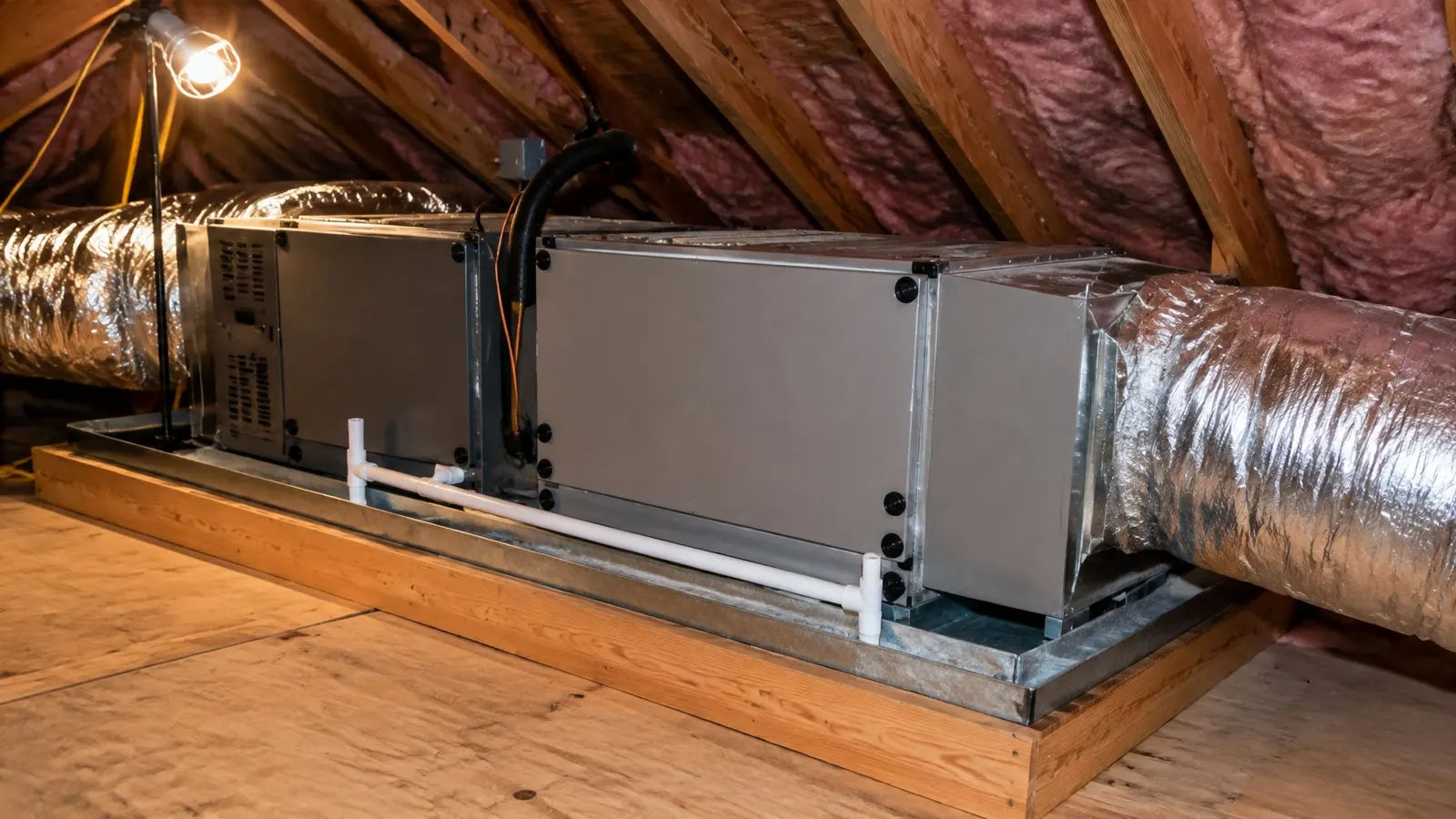
Attic systems usually have a second pan under the unit and a float switch that shuts the AC off when water rises. If your system stops and the thermostat shows no fault, check that pan before assuming the worst.

Signs water is going where it should not
- A brown ring or soft spot on the ceiling below the attic unit.
- A drain outlet outside that stays dry while the AC runs.
- A musty smell from supply vents.
- Water in the secondary pan, which should normally be dry.
Common questions
Is a frozen coil always a refrigerant leak?
No. Airflow problems freeze coils just as often. A contractor will rule out filters and blowers before adding refrigerant.
Can I clear the drain line myself?
Many lines have a cleanout near the indoor unit. Flushing it with water can clear a light clog. A line that keeps clogging needs a contractor to look at slope and traps.
Get a heating and cooling contractor on the phone
Say what the system is doing and how old it is, if you know. The person you reach works for an independent contractor in Southeast Texas, not for this website.