AC installation, Beaumont, Texas
AC replacement and new installs in Beaumont
Replacing a central air system is the largest HVAC decision most households make. This page covers how a contractor sizes the new equipment, what changed in 2026, which permits apply in Beaumont and what moves the final figure up or down.
Signs the current system is near the end
No single symptom settles it, but a few together usually do:
- The compressor has failed, or a contractor has found it drawing far more current than it should.
- Refrigerant has been added more than once and the leak is in the coil itself.
- The outdoor coil fins are corroded or crumbling, so the unit can no longer shed heat well.
- Rooms that once cooled evenly now run several degrees apart, even after duct and filter fixes.
- The indoor coil and the outdoor unit no longer match, after one half was swapped years ago.
What changed on January 1, 2026
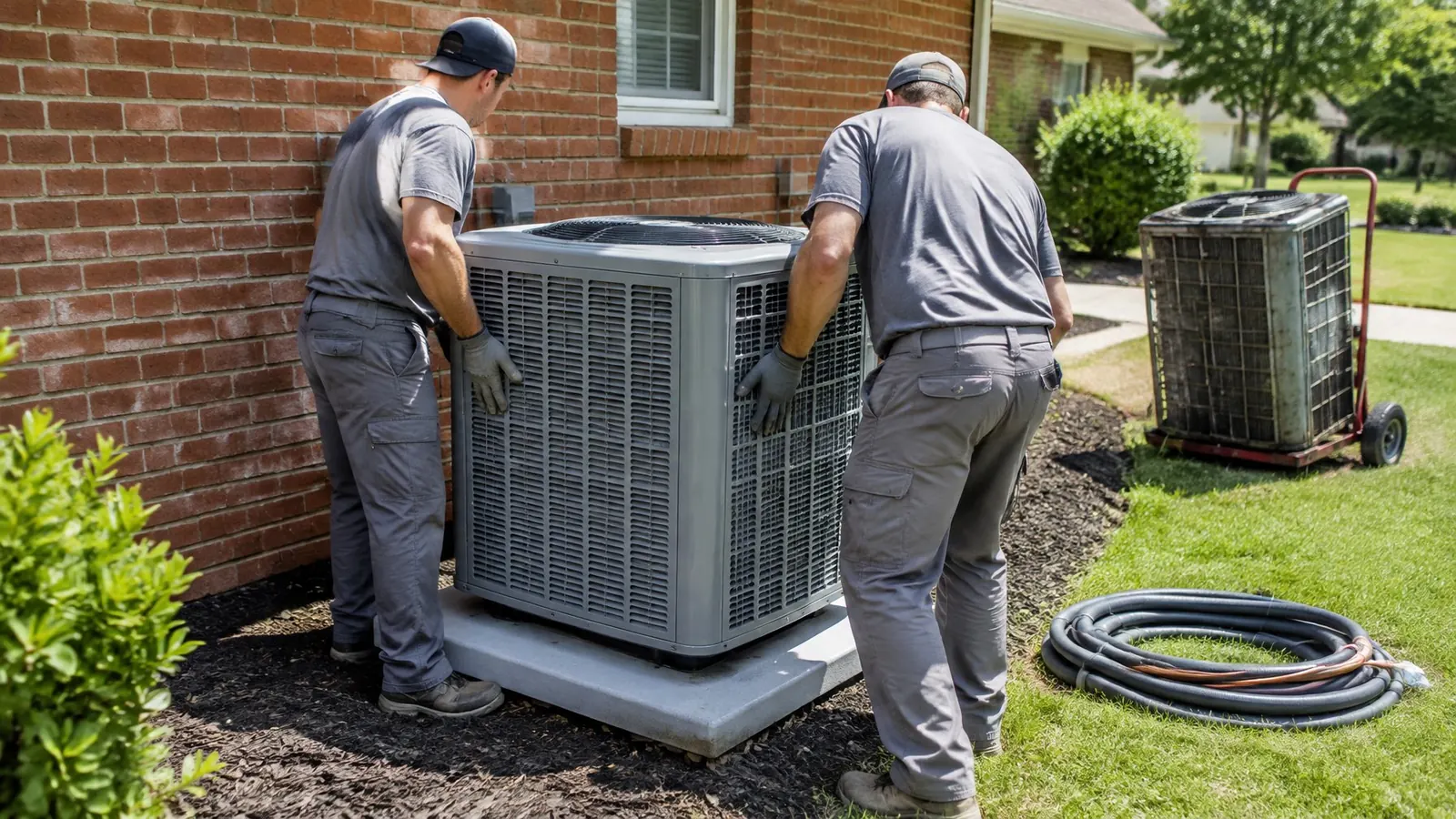
Under the federal HFC rules, any whole new split system installed after January 1, 2026 has to use a refrigerant with a global warming potential below 700, according to the EPA homeowner questions. R-410A sits above that line, so new equipment arrives built for one of the newer refrigerants.
Two practical results follow. The outdoor unit and the indoor coil have to be designed for the same refrigerant, so replacing only the condenser on an old R-410A coil is a repair, not a new install, and it stays allowed. And when a contractor swaps the condensing unit and the indoor coil together, the EPA counts that as a new system, even if the old copper lines stay in the wall.
Ask the contractor which refrigerant the new system uses and whether the existing line set can be reused or must be replaced.
Sizing comes before brand
A system that is too big cools the air quickly and shuts off before it has pulled much water out. In Beaumont that leaves a cool, clammy house. One that is too small runs all afternoon and still falls behind in August.
A careful contractor works the size out from the house rather than from the old unit's label. Expect questions or measurements about square footage, ceiling height, window area and which way the windows face, attic insulation and the condition of the ducts. Matching the old tonnage is only right if the old tonnage was right.
The parts of the job you do not see
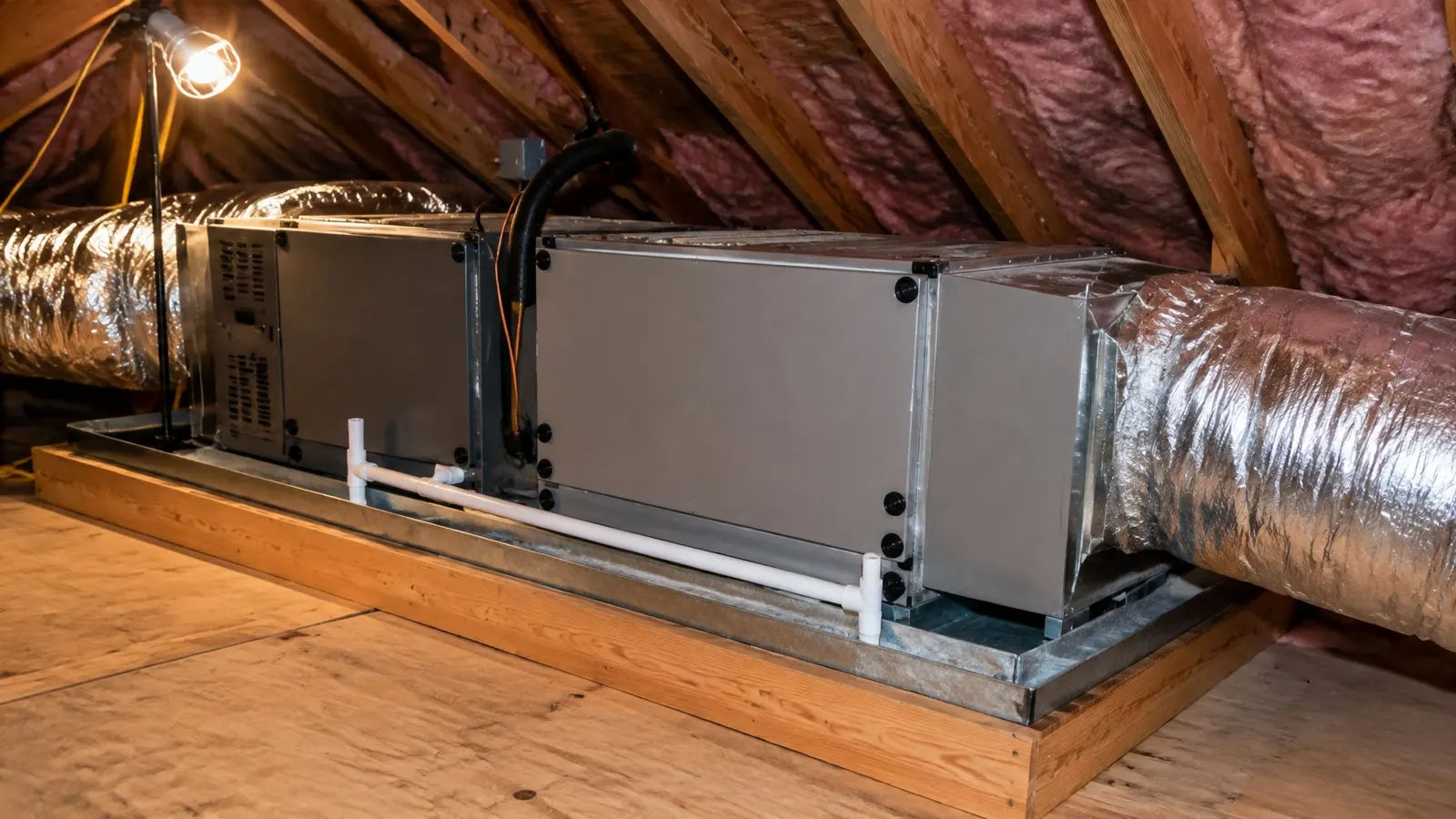
The outdoor unit gets the attention, but most of the work happens indoors and in the attic. A full replacement usually touches the following:
- Indoor coil and air handler or furnace. They must be rated to run with the new outdoor unit.
- Refrigerant lines. Reused only if they are the right size, clean and tight enough to hold the new refrigerant without leaking.
- Condensate drain and secondary pan. Attic units need a working overflow path so a clog does not reach the ceiling.
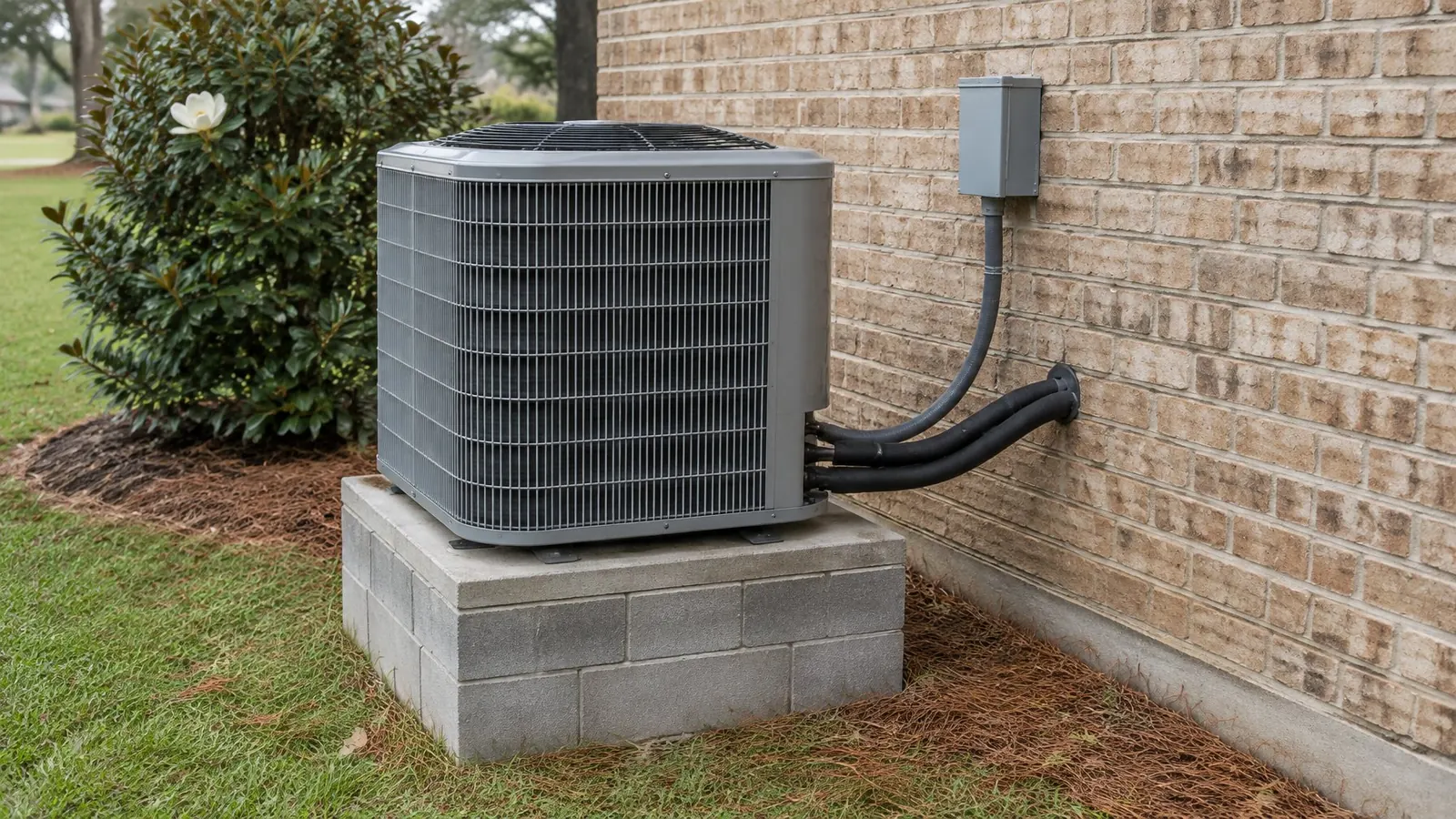
- Electrical disconnect and breaker. Sized to the new unit's nameplate.
- Pad or stand. Where a yard holds water after heavy rain, a raised stand keeps the condenser clear of it.
- Thermostat. Swapped or rewired if the new system stages or runs a variable-speed blower.
What moves the cost of a new system
| Factor | Why it matters |
|---|---|
| Capacity | More tons of cooling means larger, heavier equipment. |
| Efficiency rating | Higher SEER2 equipment uses less power and costs more up front. |
| Single, two-stage or variable speed | Staged and variable systems handle humidity better at part load. |
| Matching indoor equipment | A new coil, air handler or furnace adds parts and labor. |
| Line set | New copper and insulation add material and time, especially in tight walls. |
| Attic access | A cramped or hot attic slows every step of an air handler swap. |
| Duct repairs | Torn or undersized ducts can waste much of what a new system delivers. |
| Permit and inspection | Set by the city where the house sits. |
No prices appear on this site. Ask for a written quote that lists each item above that applies.
Permits in Beaumont
The City of Beaumont says all permits are issued through its Building Codes portal or by phone at 409-880-3762. Inspections are booked by the permit holder through the city's online City Works portal, and the city notes on its building codes page that it does not take inspection requests by phone.
Since the permit holder books the inspection, ask the contractor whose name the permit will be under and when they expect the final inspection. Outside city limits, the rules of the town or county apply; the town pages cover four nearby cities.
Utility programs worth asking about
Entergy Texas, which lists Jefferson, Hardin and Orange among the 27 counties it serves, runs an HVAC distributor program. It pays incentives to distributors that sell qualifying high-efficiency central air conditioners and heat pumps, using AHRI-matched systems installed inside its service territory. Entergy says it does not pay homeowners directly under that program.
So the question to ask is whether the system you are being quoted qualifies, and whether the distributor incentive is already part of the price you see.
Heat pump or straight AC
A ducted heat pump replaces both the outdoor AC unit and the role the furnace plays in winter, using the same ducts. Where winters are mild, a heat pump can carry most of the heating on its own. Other owners keep a gas furnace for heat and add a standard condenser. The furnace and heat pump page covers the heating side.
How a replacement usually goes
Every contractor runs things a little differently. This is the common shape of the job.
Assessment
The contractor looks at the old system, the attic, the ducts and the electrical panel, and measures the house.
Written quote
Equipment model numbers, refrigerant type, what is reused and what is new, permit handling and warranty terms.
Install day
Old refrigerant is recovered, the old equipment comes out, the new system goes in and the lines are pressure tested and evacuated.
Start-up
Charge, airflow and temperature split are checked, and the thermostat is set up.
Inspection
The permit holder books the city inspection after the work is done.
Common questions
Can I replace just the outdoor unit?
Often yes, if the indoor coil is in good shape and the matched replacement is still made. The EPA treats a like-for-like condensing unit swap on an existing system as a repair. Ask whether the result will still be a rated, matched system.
Does the new refrigerant need different equipment indoors?
Yes. The indoor coil must be built for the same refrigerant as the outdoor unit. That is why many replacements now include the coil.
How do I know the installer is licensed?
Texas rules require AC contracting companies to put their license number on their advertising and on both sides of their work vehicles (16 TAC 75.71). Check that number on the TDLR search.
Will the old unit be hauled off?
Ask in advance. Most quotes say whether removal and refrigerant recovery are included.
Where these facts come from
Get a heating and cooling contractor on the phone
Say what the system is doing and how old it is, if you know. The person you reach works for an independent contractor in Southeast Texas, not for this website.