AC repair, Beaumont, Texas
Air conditioning repair in Beaumont
Warm air from the vents, a condenser that buzzes without spinning, a breaker that keeps tripping. Here is what usually sits behind each one, and what to check before you call.
Three checks to make first
Look at the thermostat. It should be set to cool, with the setpoint a few degrees under the room temperature. Fresh batteries fix more blank screens than people expect.
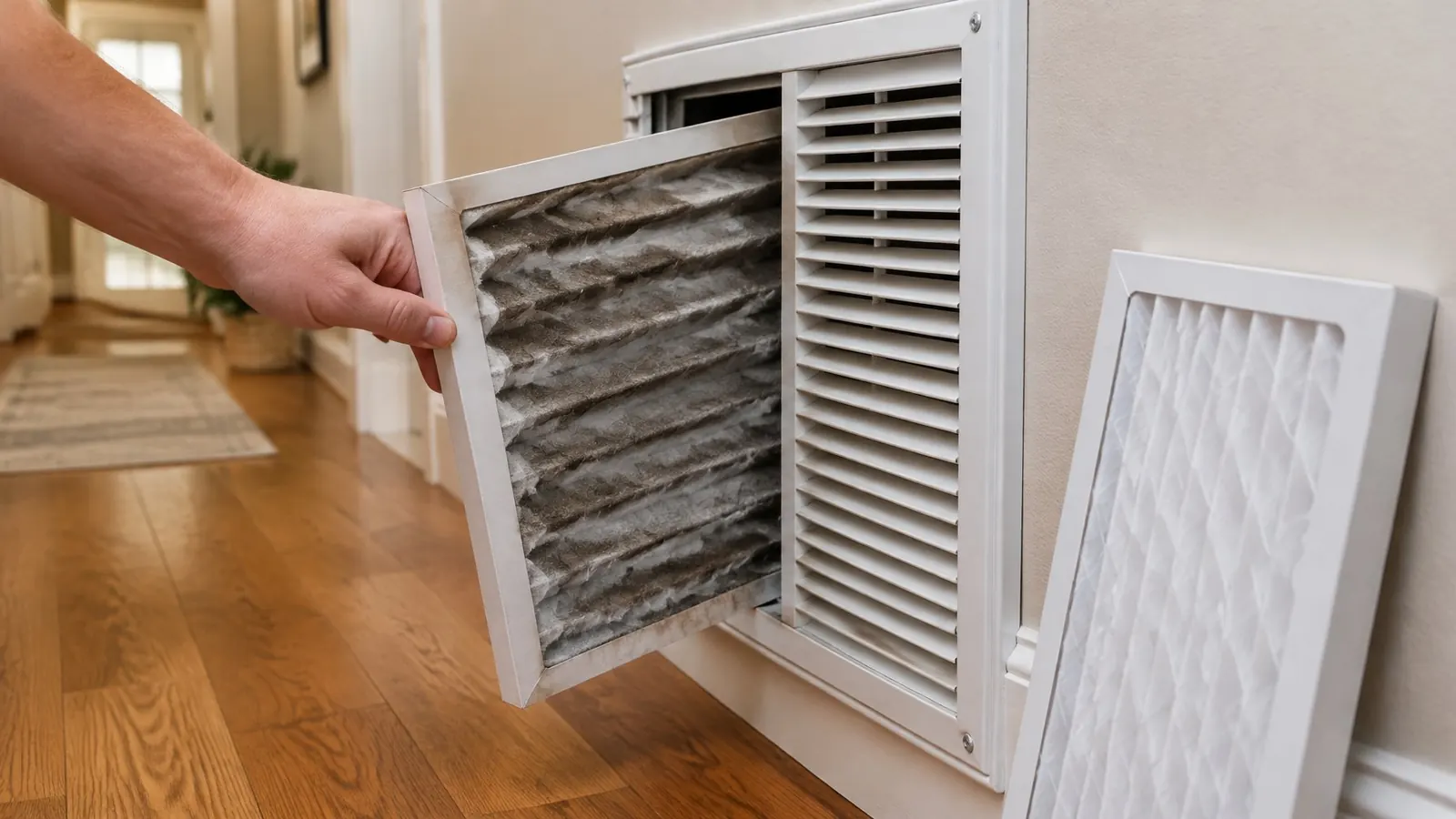
Check the filter. A filter caked with dust can starve the indoor coil until it ices over, which looks like a much bigger failure than it is.
Find the breaker panel. If the AC breaker has tripped, reset it once. If it trips again, leave it off. A breaker that trips twice is pointing at an electrical fault, and repeated resets can damage the compressor.
Faults that tend to show up here
Long cooling seasons wear out the same handful of parts again and again. These are the ones a contractor will usually test first:
- Run capacitor. It helps the compressor and fan motor start. When it weakens, the outdoor unit hums and the fan sits still.
- Contactor. The relay that switches the outdoor unit on. Pitted contacts stop the condenser from starting, or keep it running when it should stop.
- Condenser fan motor. Without it the unit cannot shed heat, and the compressor shuts itself off on high pressure.
- Clogged condensate drain. Humid air means a lot of water off the coil. Algae in the line backs it up into the pan, and a float switch may cut the system off.
- Refrigerant leak. Low charge makes the coil run too cold and freeze. Topping it up without finding the leak only delays the next call.
Leaks and the refrigerant question
Anyone who handles refrigerant on your system must hold EPA Section 608 technician certification. Central air conditioners fall under the high-pressure category.
Many Beaumont systems still run on R-410A. The EPA says homeowners can keep repairing those systems for the life of the equipment, including swapping a condensing unit or compressor. Its homeowner questions page has the details. If both the outdoor unit and the indoor coil are replaced together, the EPA treats the result as a new system, and new systems have to use a lower-GWP refrigerant.
Who does the work
Texas defines air conditioning contracting to include repair, maintenance and service, and Occupations Code 1302.251 says it may only be done by someone holding a TDLR contractor license. The contractor you reach will have their own license number. Ask for it, then check it on the TDLR search.
Common questions
The outdoor fan is spinning but the air inside is warm. What does that point to?
Often a compressor that is not starting, a low refrigerant charge, or an indoor coil blocked by ice or dirt. A contractor will measure pressures and temperatures to tell them apart.
Should I keep running the system while I wait?
If you see ice on the lines or water spilling from the pan, switch the system to off and leave the fan on auto. Running a frozen coil can push liquid back to the compressor.
Is a repair visit the same as a tune-up?
No. A repair visit looks for one fault. A tune-up covers cleaning and checks across the system; see the maintenance page.
Get a heating and cooling contractor on the phone
Say what the system is doing and how old it is, if you know. The person you reach works for an independent contractor in Southeast Texas, not for this website.