Guide
AC running, house still warm
The fan is on and the outdoor unit hums, but the rooms keep creeping up. Here are the usual reasons, in roughly the order a contractor checks them.
Start with airflow
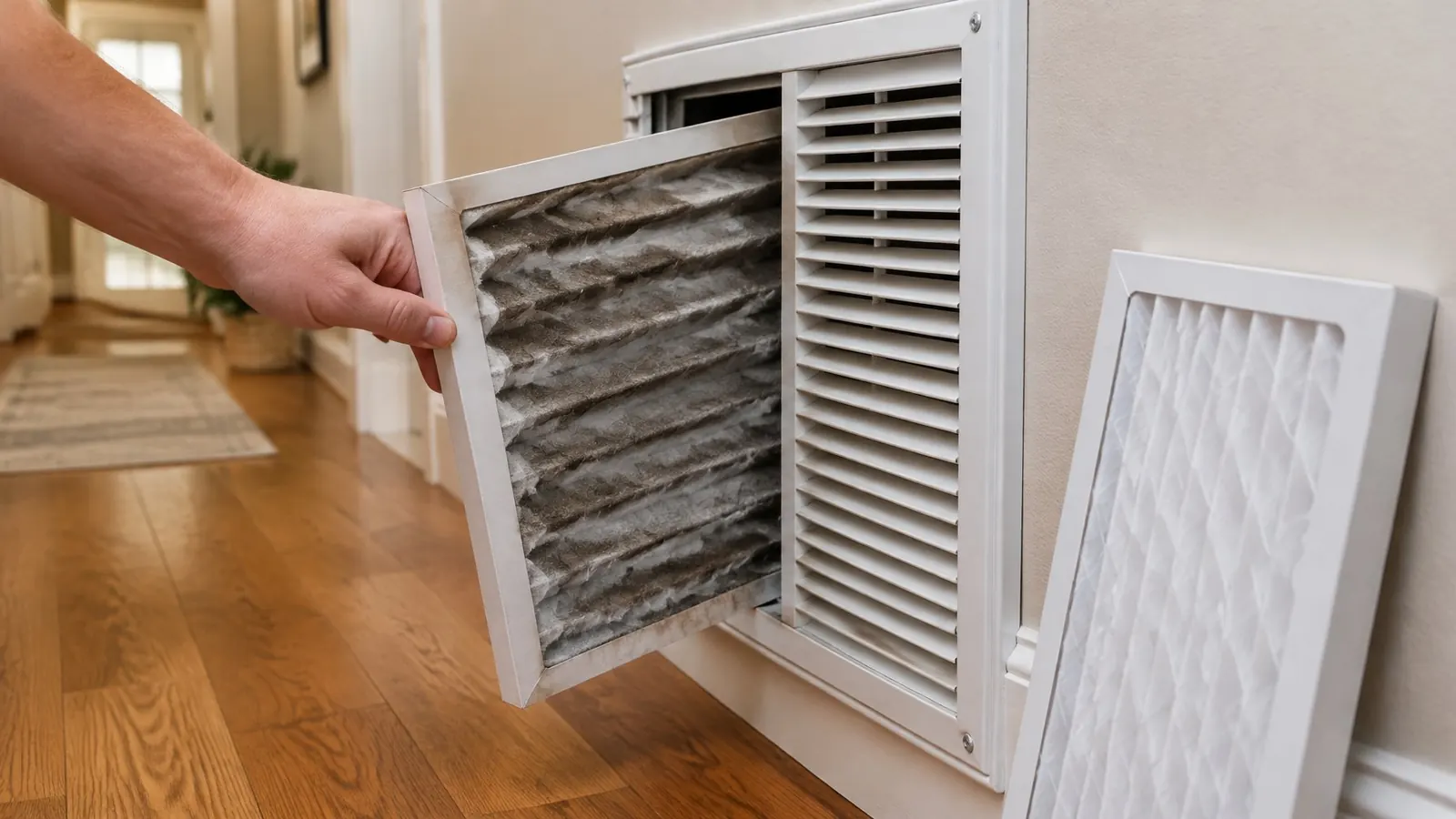
Hold a hand to a supply vent. If the air is cool but weak, the problem is usually airflow rather than cooling. A blocked filter, closed registers, a crushed duct in the attic or a dirty blower wheel can each cut the air down to a trickle.
Weak, cold air together with sweating or icy copper lines points to a coil that has started to freeze. Turn the system off and leave the fan running to thaw it before anyone tests it.
Then the outdoor unit
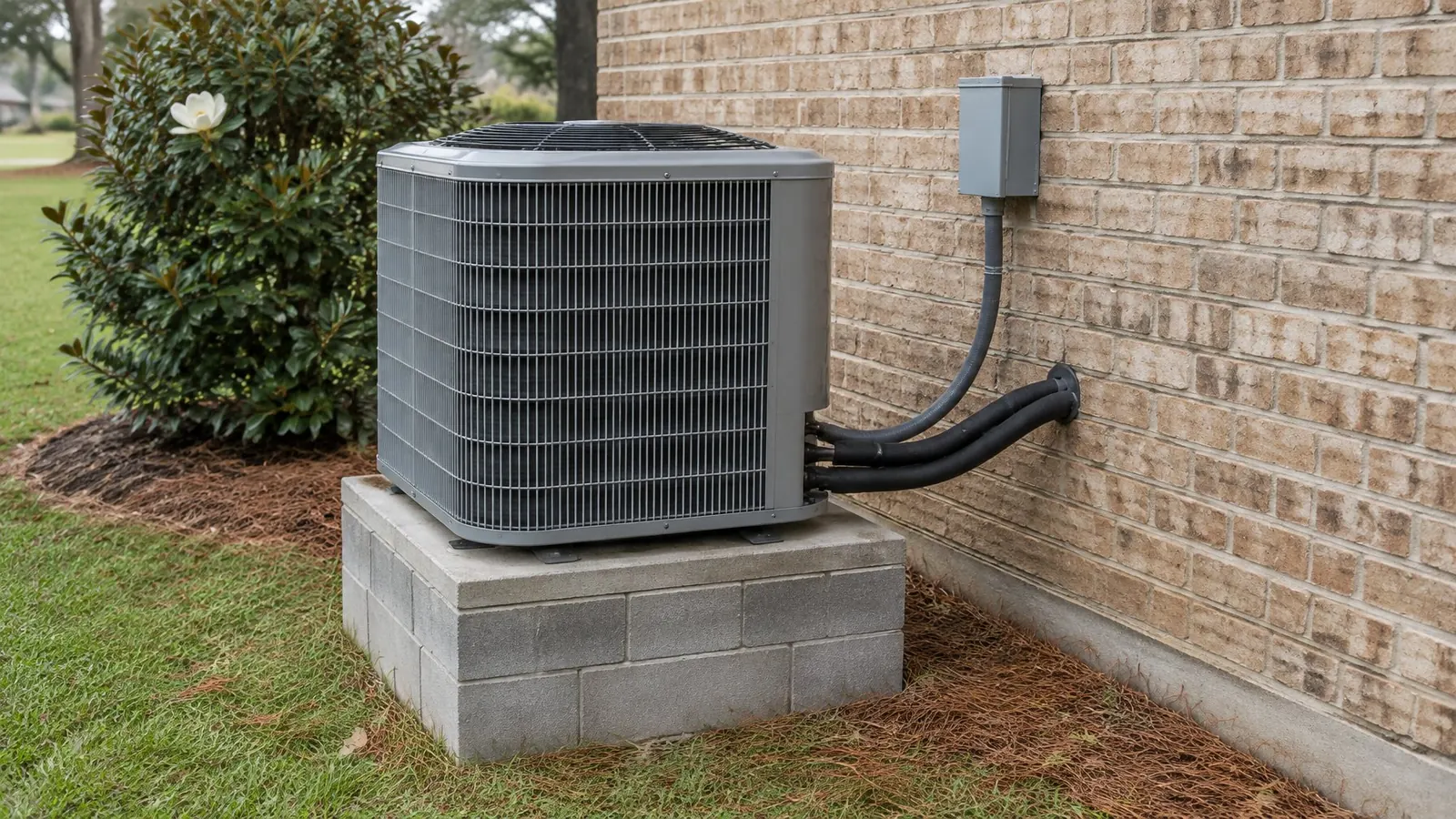
Stand by the condenser while the system runs. The fan on top should spin and warm air should blow out. If the fan is still and the unit hums, a capacitor or fan motor is the likely culprit. If everything spins but the air coming out is barely warm, the compressor may not be running at all.
Also look at the coil. A coat of cottonwood fluff, grass clippings or dryer lint on the fins can push the pressures high enough that the system protects itself by shutting off.
When the system is simply outmatched
On the hottest days, even a healthy system may fall a few degrees behind. In 2023, Beaumont/Port Arthur logged 36 days at 100°F or above in one summer, second only to 1902 in the National Weather Service record.
If the house recovers each evening and holds steady at night, the system may be working as designed. If it never catches up, even after dark, something else is wrong.
What to tell the contractor
When it started
Sudden failures and slow declines point to different parts.
What the outdoor unit does
Fan spinning or still, humming, clicking or silent.
Any ice or water
On the lines, the coil, the pan or the ceiling.
The age of the system
The date is often on the outdoor unit's data plate.
Where these facts come from
Get a heating and cooling contractor on the phone
Say what the system is doing and how old it is, if you know. The person you reach works for an independent contractor in Southeast Texas, not for this website.