Guide
Heat, damp air and storms: what they do to an AC
Beaumont's weather record explains a lot about why cooling systems here wear the way they do. These figures are for the Beaumont/Port Arthur station kept by the National Weather Service office in Lake Charles.
Selected records
- 99 daysat 90°F or above in a row, June 7 to September 13, 2023
- 130 daysat 90°F or above in the summer of 2023, behind only 1902 and 1916
- 89.2°Fthe average temperature of August 2023, the warmest August on file
Sources: streaks, day counts, August rankings.
Long seasons mean more run hours
A system that runs from late spring into fall piles up hours that a northern unit takes years to reach. Contactors pit, capacitors weaken and fan motor bearings wear in step with those hours.
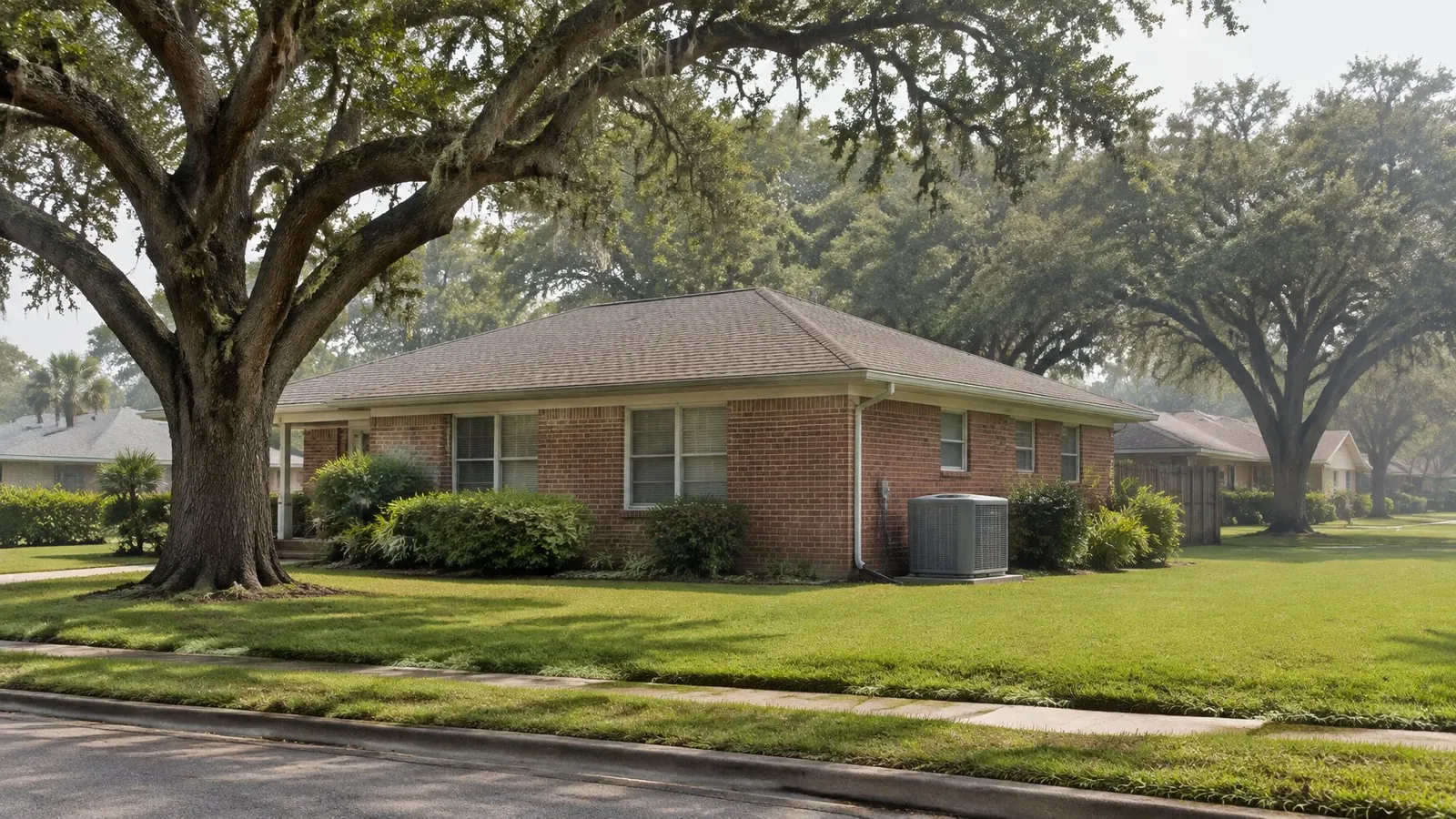
Normal highs at Jack Brooks Regional Airport for 1981 to 2010 were about 92°F in August and 88°F in September (station normals). Late heat keeps systems working well after school starts.
Damp air changes the job
In a humid climate, an air conditioner spends a large share of its effort removing water. When it falls behind, the house feels clammy at a temperature that would feel fine in drier air.
That is why oversizing hurts here. Short cycles cool the air but leave the moisture. It is also why drain lines and secondary pans matter so much: they carry a steady stream of water all season.

After a storm or flood
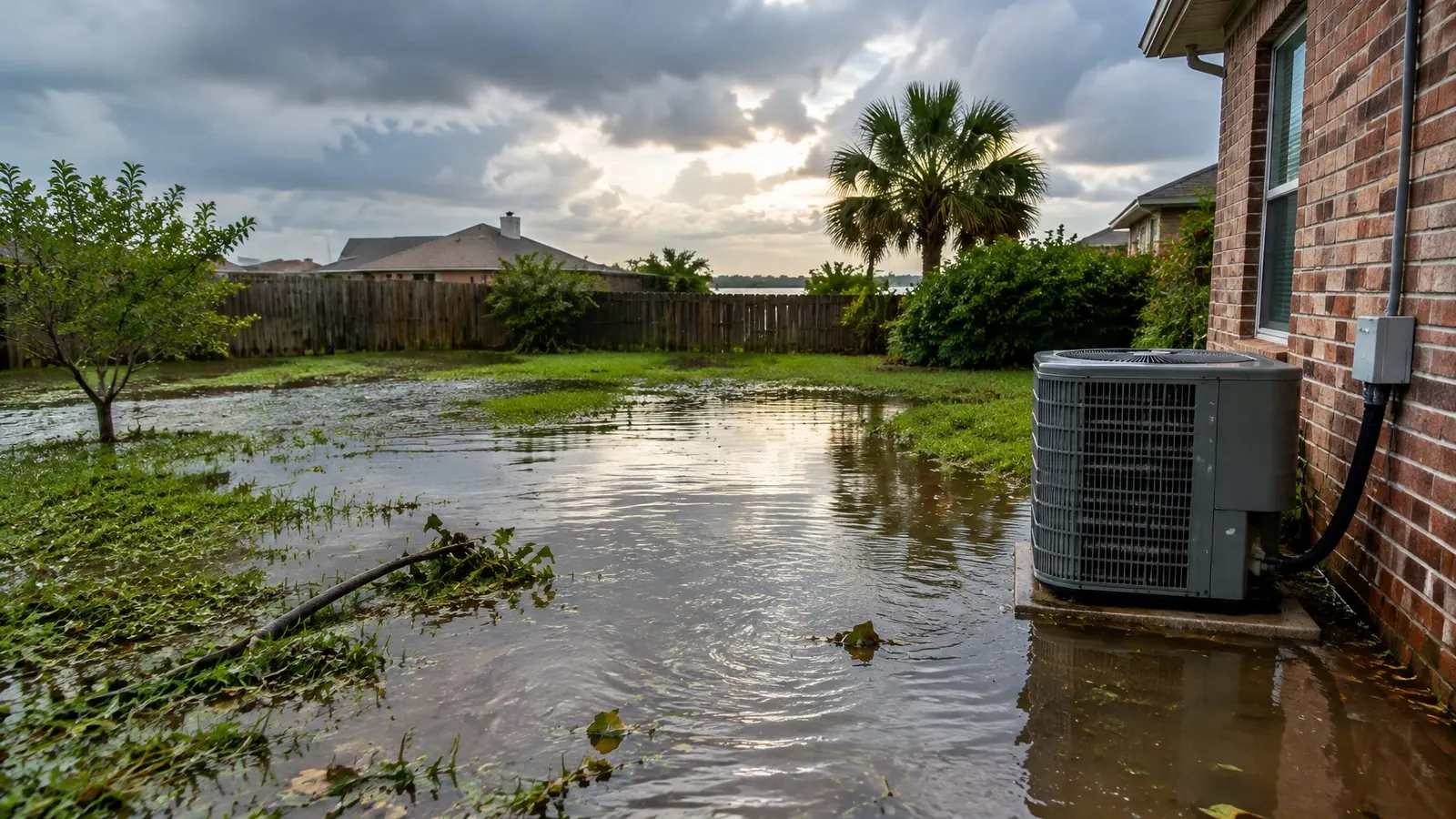
On August 29, 2017, the Beaumont/Port Arthur station recorded 26.03 inches of rain in a single day. Water at that depth can reach outdoor condensers and furnaces in garages.
The CDC advises having a flooded heating and cooling system checked and cleaned by a professional before it is turned on, and having an electrician check the house's electrical system before the power goes back on. Running a flooded system can spread mold through the ducts.
For outages, Entergy Texas takes reports through its residential page.
What helps
- A system sized for the house, not oversized, so it runs long enough to dry the air.
- A clear drain line, a working float switch and a dry secondary pan.
- A raised stand for the condenser where yards hold water.
- A spring check before the first long hot spell.
Where these facts come from
Get a heating and cooling contractor on the phone
Say what the system is doing and how old it is, if you know. The person you reach works for an independent contractor in Southeast Texas, not for this website.